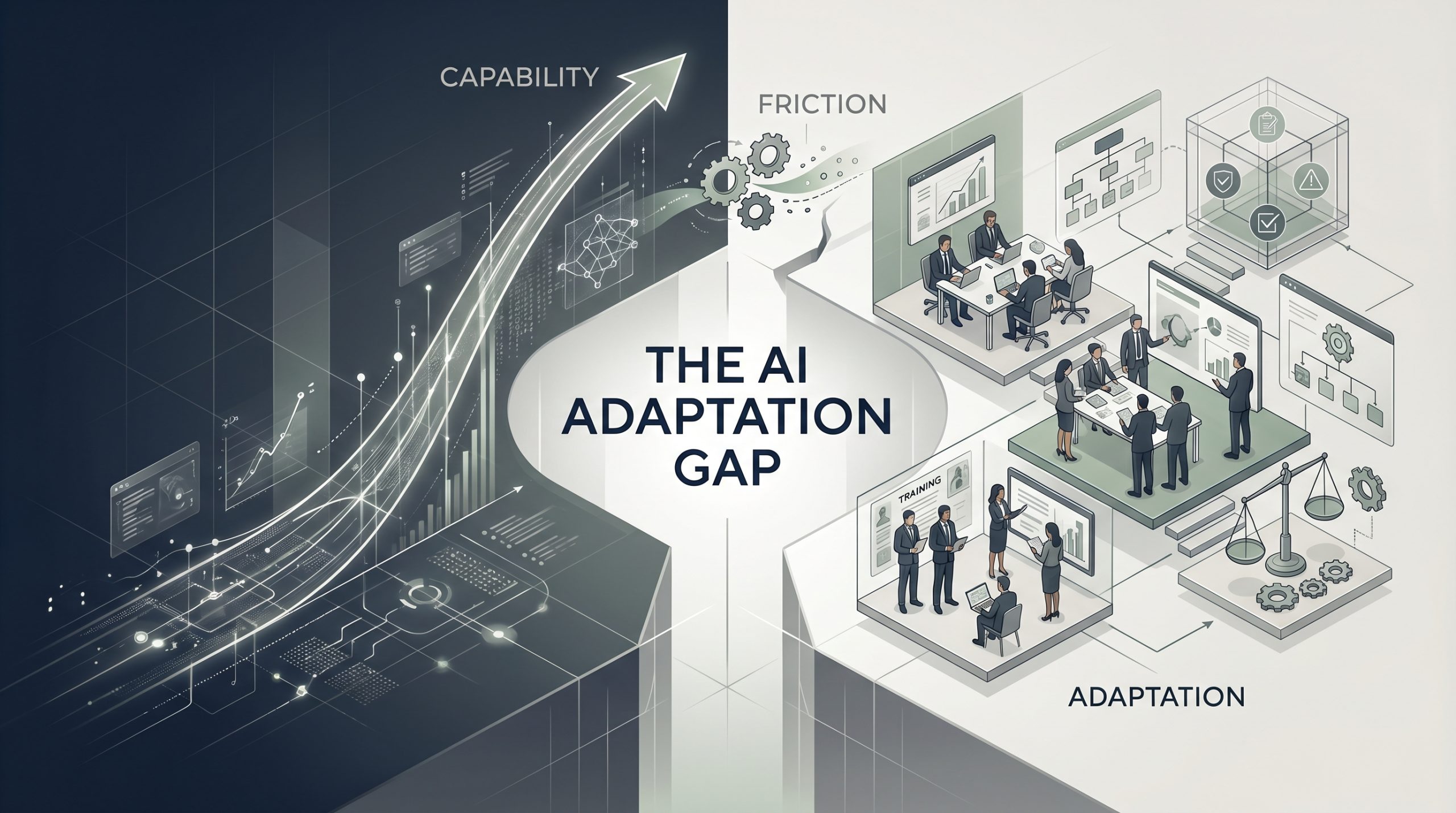
Why American workers’ distrust of workplace AI reveals a deeper organizational bottleneck: human-system readiness. BBGK SNAPSHOT Signal U.S. workers are unusually skeptical of workplace AI. Surface reading Workers fear AI or resist change. Deeper reading Some skepticism may reflect weak implementation: generic outputs, insufficient training, poor workflow integration, low trust, and unclear accountability. BBGK interpretation […]
Category: Artificial Intelligence
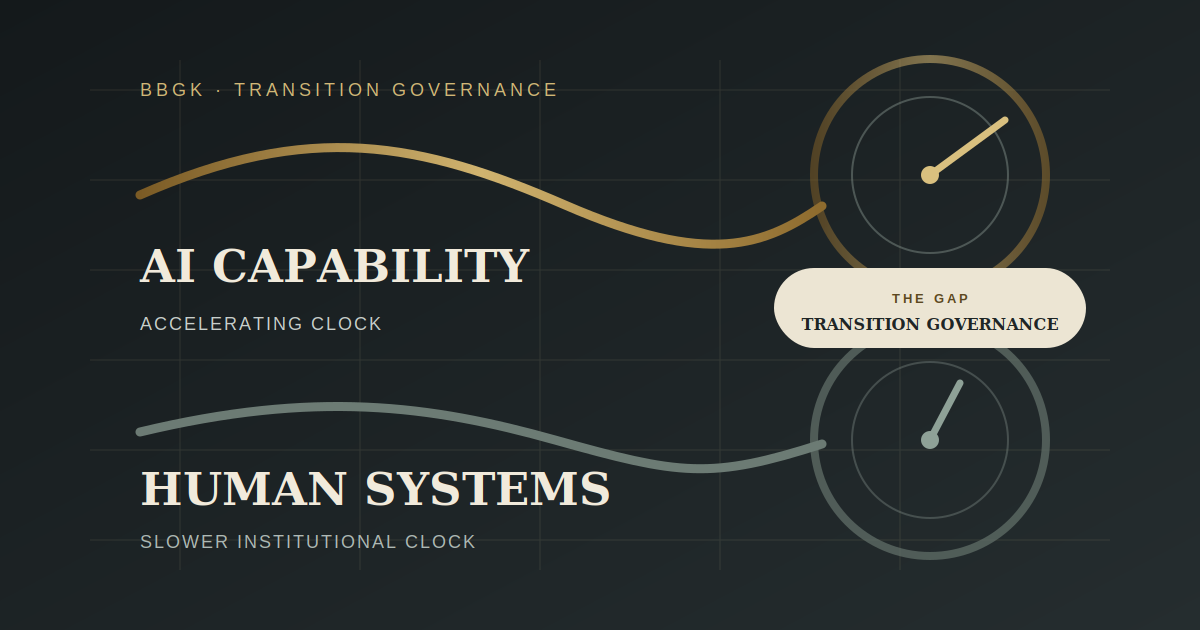
AI Won’t Stop. Humans Will Have to Reorganize.
Key takeaways AI is unlikely to stop at a clean final point. The stronger expectation is uneven progress: fast in some areas, limited or unreliable in others. AI will hit friction. The biggest friction points are compute, energy, chips, data quality, reasoning limits, reliability, safety, governance, and trust. The central risk is the human […]
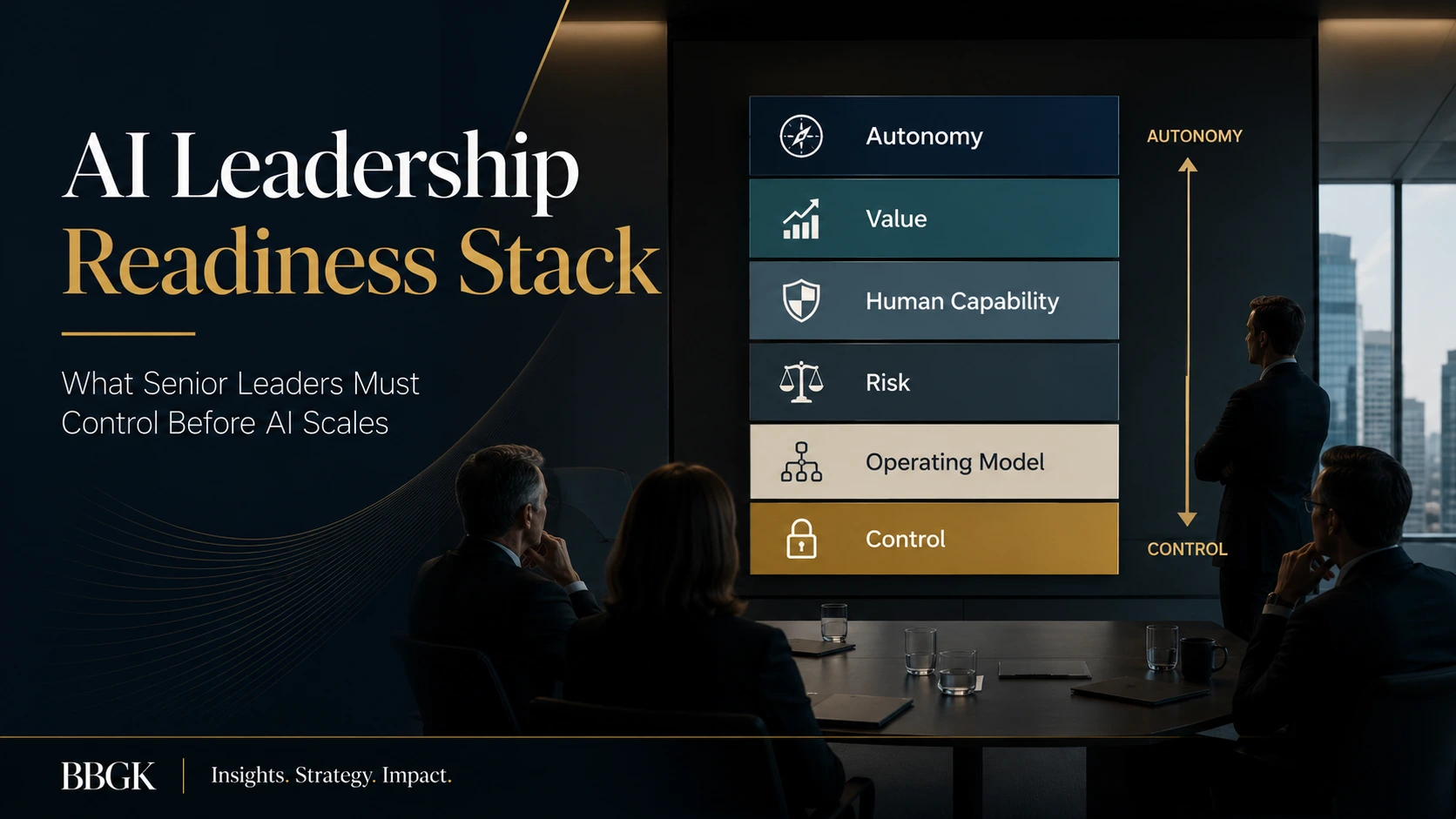
The AI Leadership Readiness Stack: What Senior Leaders Must Control Before AI Scales
The AI leadership readiness stack is a practical framework for senior leaders who need to govern artificial intelligence before it spreads across the organization faster than accountability, risk controls, data discipline, and human judgment can keep up. Most organizations are no longer asking whether AI matters. That stage is over. Employees are already using AI […]
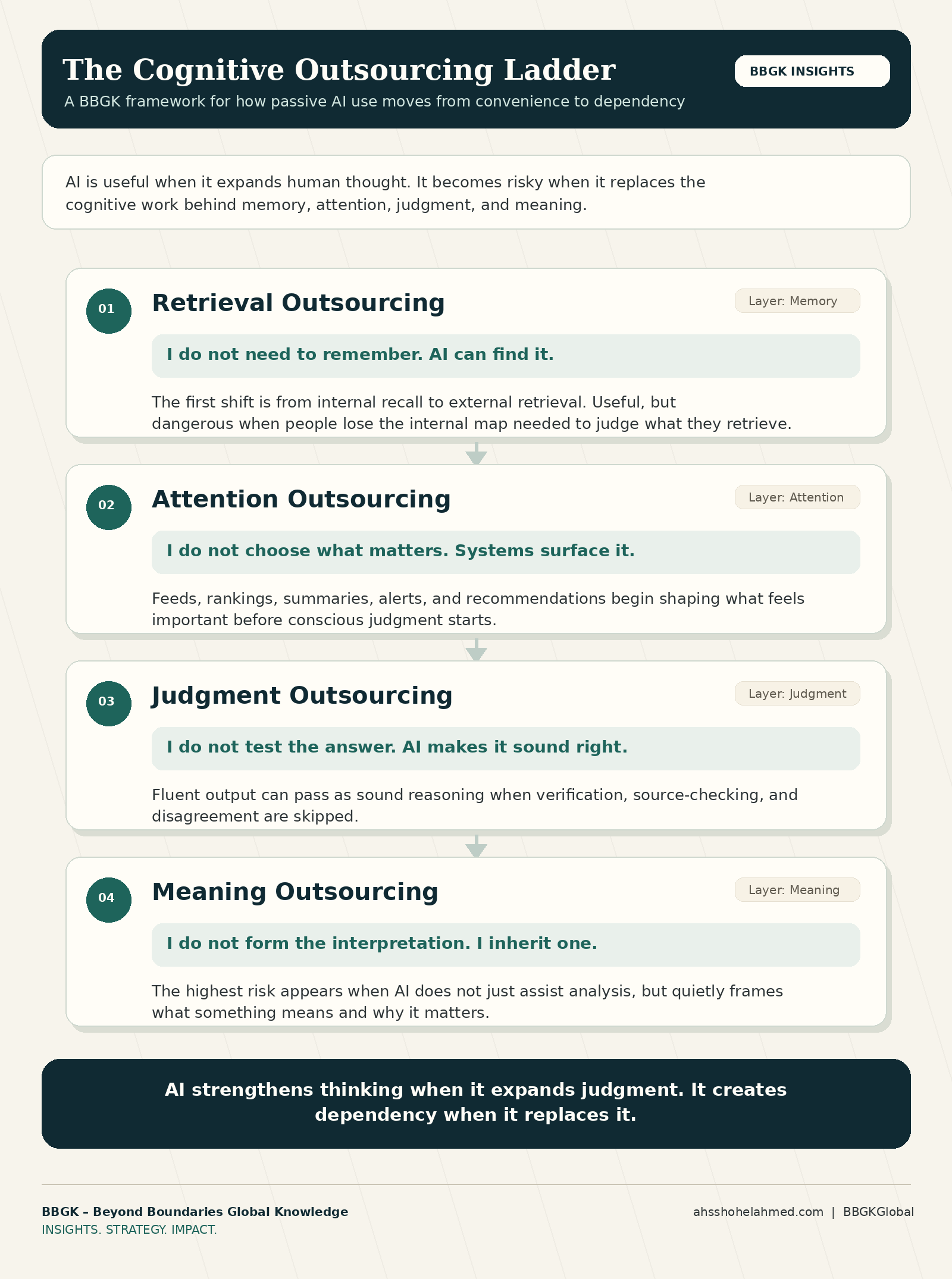
When AI Helps Us Think Less
The Risk of Cognitive Dependency in the Age of Artificial Intelligence Key Takeaways AI is useful when it extends human thinking. It becomes risky when it replaces the cognitive work behind memory, attention, questioning, judgment, and meaning. AI Is Changing What We Still Practice AI is not only changing how fast we work. It is […]
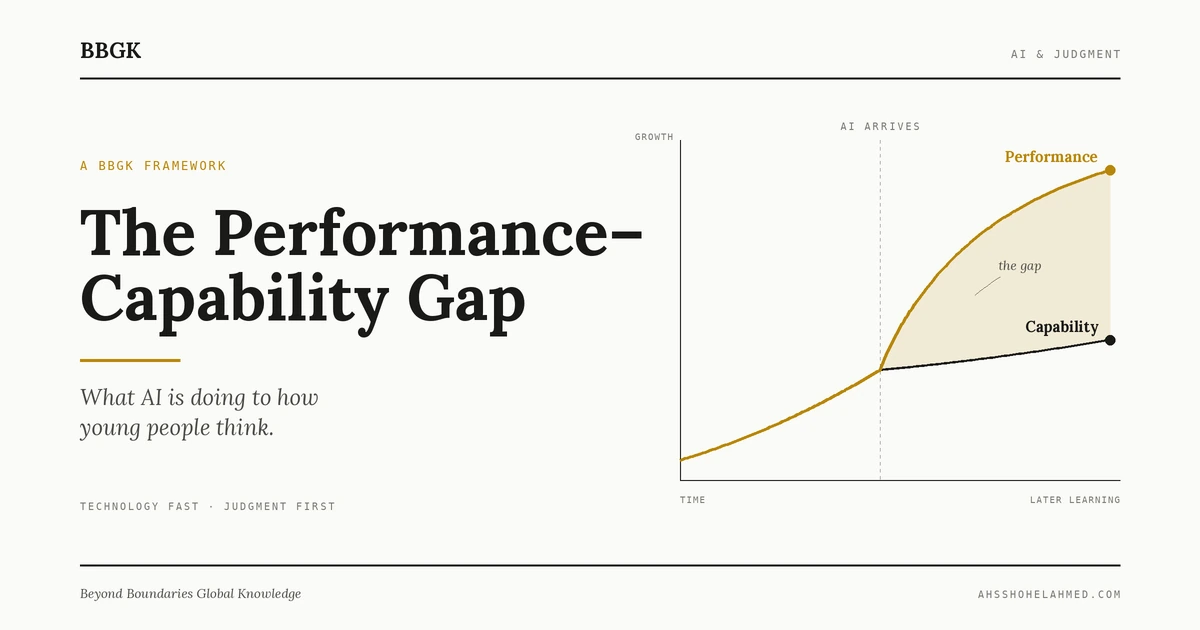
Cognitive Offloading in Young People: The Performance–Capability Gap
Artificial intelligence has become part of how young people read, write, study, solve problems, and make sense of the world around them. That much is obvious. The harder question – the one that matters more over the long term is whether AI is strengthening their minds or quietly weakening the habits that real learning depends […]
The Real Limit of GenAI Is Not Intelligence. It Is Knowledge Distance
Why generative AI can stretch human capability across adjacent work — but still hits a wall where deep judgment begins This is ultimately a question of AI and domain expertise, not AI fluency alone. Direct answer: Generative AI can extend capability into nearby domains, especially in structured and conceptual work. But when execution depends on […]
When AI Gives Bad Advice: Why Human Judgment Matters More in the Age of Generative Intelligence
The biggest risk is not that AI sounds robotic. It is that it can sound persuasive before it is truly reliable. Generative AI has introduced a new kind of advisor into the modern workplace. It is fast, articulate, and confident. But confidence is not the same as judgment. Bad AI advice is not always obvious. […]
Search Everywhere Optimization in 2026 | The New Digital Visibility Model
Search no longer happens in one place. For years, digital visibility was treated as a Google problem. Today, that is too narrow to be useful. The fundamentals still matter, and Google’s guidance on AI features and your website makes clear that AI visibility still sits on top of core search eligibility, useful content, and strong site fundamentals. […]
From Ranking to Sustained Validation — A Framework for Distribution Resilience Across Search, Discover, and AI
Executive Overview Over the past several years — particularly since the rollout of the Helpful Content system in 2022 — Google’s Core Updates have not replaced traditional ranking systems. They have recalibrated them. The structural change is not that ranking no longer matters.It is that ranking alone no longer sustains durable visibility. Organic distribution today […]